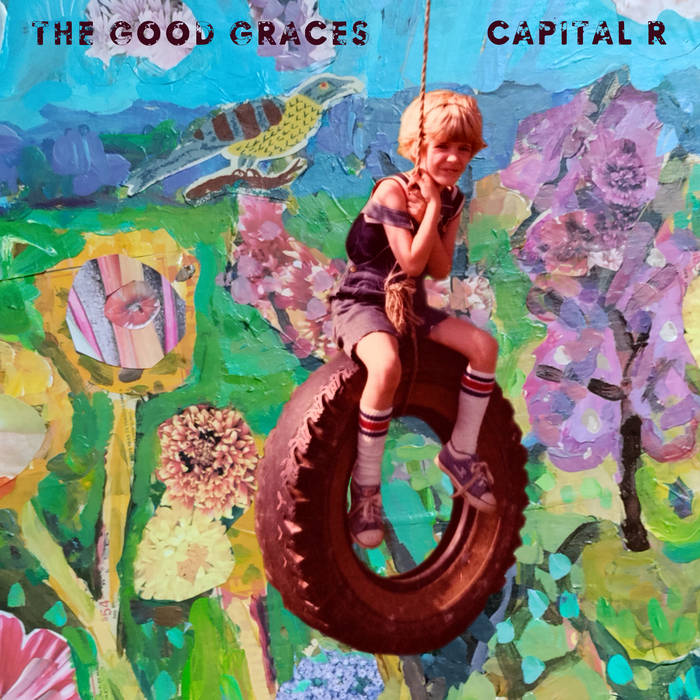
I’ll just say it: Grand Epiphanies is one of the most human records you’re going to hear in 2025, and maybe one of the few that doesn’t insult your intelligence along the way. While many releases this year seem hell-bent on either drowning themselves in studio varnish or hiding behind hipster irony, Kim Ware walks in like someone who’s survived a few things and isn’t afraid to speak plainly about the bruises. These songs don’t howl, they don’t posture—they breathe. And in an era when pop throws confetti over every emotional breakdown and calls it catharsis, Ware has the guts to sit with the silence, to let the ache settle, to make music that’s actually about feeling something and not just Instagramming the wreckage. This is a record that believes in sincerity, and for that alone, it hits like a revelation.
Deepening the craft: Why Grand Epiphanies matters
When Grand Epiphanies was released in September 2025 via Fort Lowell Records, it arrived not as a gimmick or a throwback — but as an earnest statement from a songwriter who has spent nearly two decades refining her voice. For fans of Kim Ware and The Good Graces, the EP represents both continuity and evolution. It retains the emotional honesty and Southern-tinged indie-folk roots listeners have come to expect, while embracing fuller arrangements, sharper lyrical clarity, and a maturity of perspective that only time (and living) can provide.
What emerges is a collection of songs that treat heartbreak, regret, longing, and self-doubt not as melodrama, but as shared human truths. Ware doesn’t write to shock, to boast, or to gloss over. She writes to reach — to offer a mirror to listeners, and maybe a little company in whatever dark or quiet moment they find themselves. This EP is a reminder: vulnerability doesn’t have to be pretty. It just has to be honest.
The team: musicians behind the music
Although Kim Ware remains the creative heart of The Good Graces — vocals, guitar, and songwriting — Grand Epiphanies is a collaborative effort, supported by skilled players and producers who understand how to highlight nuance rather than mask it.
On this release, producers and multi-instrumentalists Steven Fiore and Justin Faircloth play central roles, adding guitar, piano, keyboards, bass, and even backing vocals, and in doing so, help shape the record’s rich but still intimate sonic layers. Their presence builds on a long tradition within The Good Graces: throughout previous albums, different collaborators have drifted in and out of the lineup, each contributing something distinct to the band’s evolving sound. That kind of fluid membership has always been part of the project’s identity, keeping Kim Ware’s songwriting deeply personal while allowing the music itself to remain open, flexible, and continually renewed rather than fixed in a single form.
This flexible model echoes what Ware once said about the band: not as a fixed entity but as a “very talented group of friends,” coming together when inspiration, time, and circumstance allow.
In practice, this means Grand Epiphanies doesn’t feel overproduced or manufactured. Instead, it feels like friends gathered in a room, listening, playing, and creating together — a mood that invites trust and intimacy rather than distance and gloss.
Sound and style: picking up old threads, weaving new ones
Listeners familiar with earlier Good Graces albums — from Sunset Over Saxapahaw (2008) through Ready (2022) — will find much that’s familiar on Grand Epiphanies. Ware’s Southern-tinged twang, her blend of folk, country, and indie-rock sensibilities, the unhurried melodies, the earnest vocal delivery — these remain essential.
Yet this EP also feels more expansive than some earlier efforts. The production, led by Fiore and Faircloth, layers guitars, piano, subtle harmonies, and occasionally banjo or other acoustic touches to build a richer emotional landscape around Ware’s voice. Although personal taste will always shape which tracks linger the longest, several songs on Grand Epiphanies stand out for the way they crystallize what the record does best. Take the track “Old/New”: its guitar strumming and vocal lines evoke late-afternoon melancholy, but as the song unfolds, piano and backing instrumentation widen the space — giving the listener room to sink into memory, longing, and possibility. unfolds like a gentle meditation on what we leave behind and what we carry forward, its subtle layers of instrumentation creating room for genuine emotional reflection.
“Wish I Would’ve Missed You” approaches heartbreak without melodrama, turning regret and longing into something more like the experience of leafing through old photographs—quiet, tender, and unexpectedly overwhelming. And then there is “Missed the Mark,” a song that speaks directly to the insecure, the hopeful, and the uncertain, offering both an appeal for human connection and a confession of imperfection that feels disarmingly honest.
The choice to include a cover — a reimagined version of Some Guys Have All the Luck — also signals the confidence in balancing reverence and reinvention. On this EP, the cover doesn’t feel like a novelty; instead, it sits comfortably alongside Ware’s originals, transformed gently to align with the EP’s mood and tone. “Some Guys Have All the Luck” serves as a bridge between past and present, inspiration and reinterpretation. It doesn’t overshadow the original; it complements it, reminding listeners that songs evolve just as people do.
Overall, the sound of Grand Epiphanies suggests maturity without restraint, emotional depth without melodrama — the kind of record that lingers long after the final note fades.
The gift in the songs: everyday life, honest reflection, and human connection
What often sets the best singer-songwriters apart is a gift for translating ordinary moments into emotional touchstones. On Grand Epiphanies, Kim Ware exercises that gift with clarity and courage. Rather than lean on clichés — heartbreak melodrama, romantic tropes — she mines the subtler, messier terrain of real experiences: regret, nostalgia, second chances, self-doubt, hope, and quiet resilience. Many of these themes resonate universally: longing and loneliness, memory and loss, the ache of roads not taken, the fragile optimism that hums beneath everyday life.
In “Wish I Would’ve Missed You”, Ware reflects on regret and longing with a spare lyricism that strikes more powerfully than most breakup ballads. “Spent it all on grad school… every now and then a memory stops me in my tracks,” she sings — not flaunting heartbreak but confessing to being human, vulnerable, flawed.
Elsewhere — in songs like “Missed the Mark” — she turns the lens inward, wrestling with feelings of inadequacy, uncertainty, and the desperate hope to connect. “I scan the room and hope the messages I send / Somehow reach a brand new stranger, and they become a brand new friend,” she confesses, exposing the artist’s fear and longing behind performing.
The album doesn’t promise closure. It doesn’t pretend that “everything works out.” Instead, it offers companionship: a voice that says, “I feel a lot of this too.” In that way, Grand Epiphanies avoids insulting the listener’s intelligence by offering simplistic solutions. It acknowledges complexity. It honors pain. And it believes in healing — not as a fairy tale but as a slow, sometimes messy process.
How Grand Epiphanies compares to previous work
To appreciate Grand Epiphanies, it helps to see it against the backdrop of Kim Ware’s musical journey. The Good Graces began in 2006 after Ware picked up an old acoustic guitar and started composing songs rooted in Southern indie-folk traditions.
Earlier records, like Close to the Sun (2014), showed a willingness to experiment — to mix folk and country, to play with ambient touches, drum machines, and subtle electronic textures. But even then, the core remained familiar: Ware’s voice, simple guitar patterns, emotionally candid lyrics.
With Ready (2022), the songwriting felt sharper, more intentional; melodies caught between wistful longing and restless urgency. Yet Grand Epiphanies pushes further. The songs are more cohesive; the instrumentation more deliberate; the emotional stakes clearer. Listeners can trace how time, experience, and loss have deepened Ware’s perspective.
This latest EP also suggests a renewed trust in collaboration. Rather than relying solely on acoustic minimalism — the refuge of vulnerability — Ware embraces fuller arrangements. The result isn’t flashy, but it feels abundant in feeling. It’s as though she’s saying: “These aren’t just my stories alone anymore; they are ours.”
Why Grand Epiphanies feels especially relevant in 2025
We live in a time when noise is constant — in our politics, our social media, our media cycles. Simplicity and quiet reflection often feel like luxuries. In that environment, an EP like Grand Epiphanies doesn’t just matter musically; it matters morally. It represents a kind of resistance — not flashy or confrontational, but human.
Kim Ware doesn’t demand answers; she offers empathy. She doesn’t pretend life gets clean after the hard parts; she reminds us that even when scars remain, beauty can survive. For listeners who feel worn down, uncertain, or haunted by memory, these songs can be small lamps in a dark room. For those simply seeking honest songwriting in a sea of glossy distractions, the EP offers relief.
Moreover, the collaborative, evolving model of The Good Graces — weaving friends, producers, rotating musicians into a living tapestry — speaks to music as community, not commodity. In an age of streaming algorithms and viral hits, that matters.
A few honest limitations — and why they don’t hurt the EP’s purpose
As with any release built around vulnerability and introspection, Grand Epiphanies may not cater to all tastes. Listeners expecting polished pop hooks, glossy production, and immediate gratification might find its pacing too slow, its mood too muted. The EP’s strength lies precisely in its restraint — in accepting that some feelings don’t come wrapped up neat and loud.
And with only five tracks, Grand Epiphanies can feel more like a snapshot than a full portrait. Themes are introduced, emotional arcs hinted at, but not always resolved. The sense is less of closure and more of continuation. Which, in many ways, may be the point: life rarely offers tidy endings.
Still — if you’re open to being held in uncertainty for a little while; if you’re willing to sit with a guitar, a voice, and a few gentle chords — the EP offers something rare: a place to breathe.
Kim Ware and The Good Graces — still speaking, still feeling
In a musical climate often dominated by spectacle, loudness, and overstated sentiment, Grand Epiphanies stands out not because it demands attention, but because it deserves it. Kim Ware’s songwriting remains a gift: honest, gentle, unguarded, but never cloying or insincere. Backed by The Good Graces, she continues to prove that folk and indie rock can still speak to our messy, uncertain lives with clarity and heart.
For longtime listeners, the EP will feel like a meaningful evolution — a band maturing, growing more confident, more open to collaboration. For those just discovering Ware, it offers a doorway into a catalogue full of stories that don’t hide behind cliches or affectation. And for anyone longing for music that reflects rather than distracts, that comforts rather than commodifies — Grand Epiphanies is a small, glowing jewel.
In 2025, when the world often seems determined to overwhelm us with noise, Kim Ware and The Good Graces invite us to slow down, listen, and remember: we are not alone. We are human. We are trying. And maybe — just maybe — that’s enough.